
If there is one dish that defines Thai cuisine for the rest of the world, it is Tom Yum. The soup appears on Thai restaurant menus from Bangkok to Berlin, from Tokyo to New York — yet despite its global popularity, it is surprisingly rare to find a version that actually delivers what Tom Yum is supposed to be. Most restaurant interpretations get the ingredients right but miss the balance. The result is something that tastes like a spicy soup rather than a Thai soup — competent but flat, missing the thing that makes the original so alive.
This is a guide to understanding Tom Yum: where it comes from, what it should taste like, what separates an excellent version from an average one, and where to find a bowl in New York City that does the dish justice.
The Origins of Tom Yum
Tom Yum has been part of Thai culinary culture for centuries. The name breaks down simply: tom refers to the boiling or simmering process, and yum denotes the characteristic Thai flavor profile — sour, spicy, and savory in combination. Together, the words describe both a technique and a taste.
The soup originated in the central plains of Thailand, where freshwater fish and river shrimp were abundant. Early versions were simpler than what we know today — a broth of lemongrass and fish, sharpened with lime and chilies. Over time, as Thailand’s spice trade flourished and regional influences merged, the recipe evolved. Galangal replaced ginger as the dominant root. Kaffir lime leaves added a floral dimension. Nam prik pao (roasted chili paste) gave the broth its distinctive reddish depth.

Thai restaurant for special occasions NYC Thai dining near Broadway NYC Thai restaurant near 10036 zip code Thai restaurant 690 9th Ave NYC
The Anatomy of a Great Tom Yum
A proper Tom Yum is built from a specific set of aromatics that are non-negotiable. Substituting or omitting any of them produces a different dish.
Lemongrass (ta-krai): The foundational aromatic. Lemongrass gives the broth its distinctive citrus-herbal fragrance — bright, clean, and slightly floral. Fresh lemongrass is essential; dried or powdered versions produce a shadow of the real thing.
Galangal (kha): Often confused with ginger, galangal has a more resinous, piney flavor — sharper and less sweet. It adds a medicinal warmth to the broth that distinguishes Tom Yum from any other spiced soup.
Kaffir Lime Leaves (bai makrut): These double-lobed leaves are torn before being added to the broth, releasing a fragrant oil that contributes a complex citrus note. The aroma is distinctive and unmistakably Thai.
Thai Bird’s Eye Chilies (prik kee nu): These small, intensely hot chilies provide the heat. The heat from bird’s eye chilies is sharp and immediate — it hits the front of the palate rather than building slowly.
Mushrooms: Straw mushrooms are traditional, though oyster or shiitake are common substitutes. They absorb the broth beautifully and provide textural contrast.
Fish Sauce (nam pla): The primary source of salinity and umami. Quality fish sauce makes a significant difference.
Lime Juice: Added at the end, never during cooking. Fresh lime juice provides the sour element that defines the dish.
Tom Yum Nam Sai vs. Tom Yum Nam Khon
There are two primary styles, and understanding the difference helps you order more confidently:
Tom Yum Nam Sai (clear broth) is the older, more traditional version — a pure infusion of aromatics in water or light stock, finished with fish sauce and lime. Clean, sharp, and intensely aromatic.
Tom Yum Nam Khon (creamy broth) incorporates evaporated milk or coconut milk along with roasted chili paste. Richer, more rounded, with a slightly pinkish hue. This version has become the international standard.
Neither is superior; they are simply different expressions of the same foundational recipe.
The Protein: Why Seafood Matters
Tom Yum can be made with chicken, pork, or vegetables — but the most celebrated version uses shrimp or mixed seafood. Seafood’s natural brininess complements the broth’s sourness in a way that other proteins don’t. The sweetness of fresh shrimp, the firmness of squid, the richness of shellfish — these flavors align with the aromatic profile of the broth rather than competing with it.
The freshness of the seafood matters enormously. Tom Yum broth is transparent — it does not hide the quality of the protein inside it.
Tom Yum in New York City: What to Look For
Finding excellent Tom Yum in New York requires knowing what a proper bowl should deliver:
The broth should be aromatic from the moment the bowl arrives. You should smell the lemongrass and galangal before you taste anything.
The first spoonful should hit multiple notes simultaneously — sour, spicy, savory — without any one flavor dominating.
The aromatics — lemongrass, galangal, kaffir lime leaves — should be visible in the bowl. Their presence confirms that fresh aromatics were used rather than a paste or powder.
The seafood should be cooked correctly. Shrimp should be just curled and pink, firm but not rubbery.
Tom Yum With Mix Seafood Spicy at Elephant Ear Best
The Tom Yum With Mix Seafood Spicy ($23) at Elephant Ear Best in Hell’s Kitchen is the kitchen’s most-ordered dish. The broth is built from fresh lemongrass, galangal, and kaffir lime leaves, with whole bird’s eye chilies visible in the bowl. The heat is assertive but controlled. The sourness from fresh lime juice is clean and bright. The seafood is cooked precisely, maintaining its natural sweetness against the sharp broth.
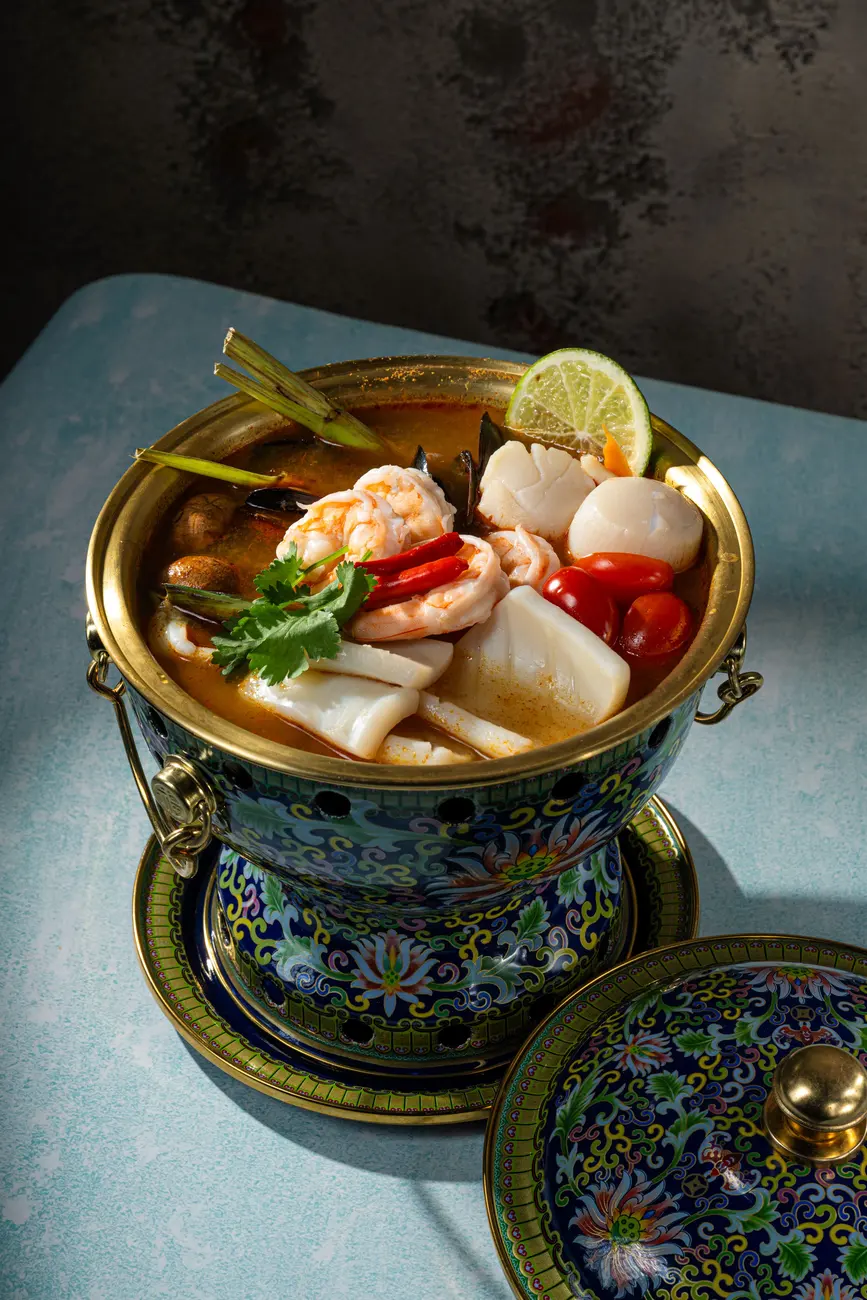
At $23, it’s a fair price for Midtown Manhattan given the quality of the seafood and the labor involved in building a proper broth from scratch.
Pairing Tom Yum: What to Order Alongside It
Tom Yum pairs well with the Pineapple Fried Rice ($18–22), whose sweetness and smokiness contrast with the soup’s acidity. The Stir Fried Crispy Chicken With Lemon Grass ($26) shares the lemongrass aromatic backbone. The Mango Avocado Papaya Salad ($17) refreshes the palate between spoonfuls of soup.
Final Thoughts
Tom Yum is one of the great soups of the world — not because it is complicated, but because it is precise. Every ingredient serves a purpose. Every balance decision matters. When it is made correctly, it is a complete sensory experience in a single bowl.
View Full Menu | Order Online for Pickup | Reserve a Table
Elephant Ear Best | 690 9th Ave, New York, NY 10036 | 646-478-8661 | Open Daily 11:30am – 11:00pm
Frequently Asked Questions
What are the key ingredients in Tom Yum soup? Authentic Tom Yum is built from fresh lemongrass, galangal, kaffir lime leaves, bird’s eye chilies, mushrooms, fish sauce, and fresh lime juice. These aromatics are non-negotiable.
What is the difference between Tom Yum Nam Sai and Tom Yum Nam Khon? Nam Sai is the clear-broth version — sharp and traditional. Nam Khon incorporates evaporated milk or coconut milk, producing a creamier, richer broth. Neither is superior; they are two distinct expressions of the same recipe.
Where can I find the best Tom Yum soup in NYC? Elephant Ear Best at 690 9th Avenue in Hell’s Kitchen. Their Tom Yum With Mix Seafood Spicy ($23) is built from fresh aromatics with precisely cooked mixed seafood. Call 646-478-8661 to reserve.
Is Tom Yum soup healthy? Generally yes — low in calories, rich in antioxidants from fresh aromatics, and provides lean protein from seafood. The main sodium consideration comes from fish sauce, which can be moderated on request.
How spicy is Tom Yum soup? Traditional Tom Yum uses bird’s eye chilies — sharp and immediate heat. Elephant Ear Best can adjust the spice level on request.
What dishes pair well with Tom Yum soup? At Elephant Ear Best: Pineapple Fried Rice ($18–22), Stir Fried Crispy Chicken With Lemon Grass ($26), or Mango Avocado Papaya Salad ($17).